Beginner’s Guide to Installing Solar Panels at Home
Installing solar panels at home is one of the most practical steps homeowners can take to reduce electricity bills and support clean energy use. With falling equipment costs and improving technology, residential solar systems are becoming more accessible than ever.
This beginner-friendly guide explains how solar panels work, what you need before installation, and how to get started confidently.
How Solar Panels Work in Simple Terms ⚡
Solar panels convert sunlight into electricity using photovoltaic (PV) cells. When sunlight hits these cells, they generate direct current (DC) electricity. An inverter then converts this into alternating current (AC), which powers household appliances.
A typical home solar setup includes:
- Solar panels
- Mounting structures
- Solar inverter
- Wiring and protection devices
- Net meter (in grid-connected systems)
Together, these components create a reliable renewable energy solution.
Benefits of Installing Solar Panels at Home 🌱
Home solar systems offer both financial and environmental advantages.
Key benefits include:
- Lower monthly electricity bills
- Reduced dependence on grid power
- Protection against rising energy costs
- Clean and renewable energy production
- Increased property value in many cases
Over time, solar installation becomes a long-term investment rather than an expense.
Check Whether Your Home Is Suitable for Solar Installation 🏡
Before installation, evaluate whether your home meets basic solar requirements.
Important factors include:
- Roof direction: South-facing roofs typically receive the most sunlight (in the Northern Hemisphere)
- Roof condition: Structures should be strong enough to support panel mounting
- Shadow exposure: Nearby trees or buildings should not block sunlight
- Available space: More space allows higher electricity generation capacity
Even partial sunlight exposure can still make solar installation worthwhile.
Understand the Types of Home Solar Systems 🔋
Different solar system types serve different household needs.
Grid-Tied Solar Systems
These systems remain connected to the electricity grid.
Advantages:
- Lower installation cost
- Net metering benefits
- No battery required
- Efficient daily operation
Off-Grid Solar Systems
These systems operate independently from the electricity grid.
Advantages:
- Useful in remote areas
- Complete energy independence
- Reliable backup during outages
However, they require battery storage for nighttime usage.
Hybrid Solar Systems
Hybrid systems combine grid connectivity with battery storage.
Advantages:
- Backup power availability
- Energy storage flexibility
- Maximum control over electricity usage
Hybrid systems are increasingly popular for residential installations.
Estimate Your Household Energy Requirements 📊
Understanding your electricity usage helps determine the correct system size.
Start by:
- Reviewing recent electricity bills
- Identifying high-consumption appliances
- Calculating average monthly usage
- Planning future electricity needs
Accurate estimation ensures efficient system performance.
Choose the Right Solar Panel Type ⭐
Solar panels are available in several varieties.
Common options include:
Monocrystalline Panels
- High efficiency
- Long lifespan
- Better performance in limited space
- Higher cost compared to other types
Polycrystalline Panels
- More affordable
- Slightly lower efficiency
- Suitable for larger rooftops
Thin-Film Panels
- Lightweight
- Flexible installation options
- Lower efficiency than crystalline panels
Selecting the right type depends on budget and roof space.
Understand the Role of Solar Inverters 🔄
Solar inverters convert generated electricity into usable household power.
Common inverter types include:
- String inverters
- Microinverters
- Hybrid inverters
Modern inverters also provide monitoring features for tracking system performance.
Know the Basic Installation Process 🛠️
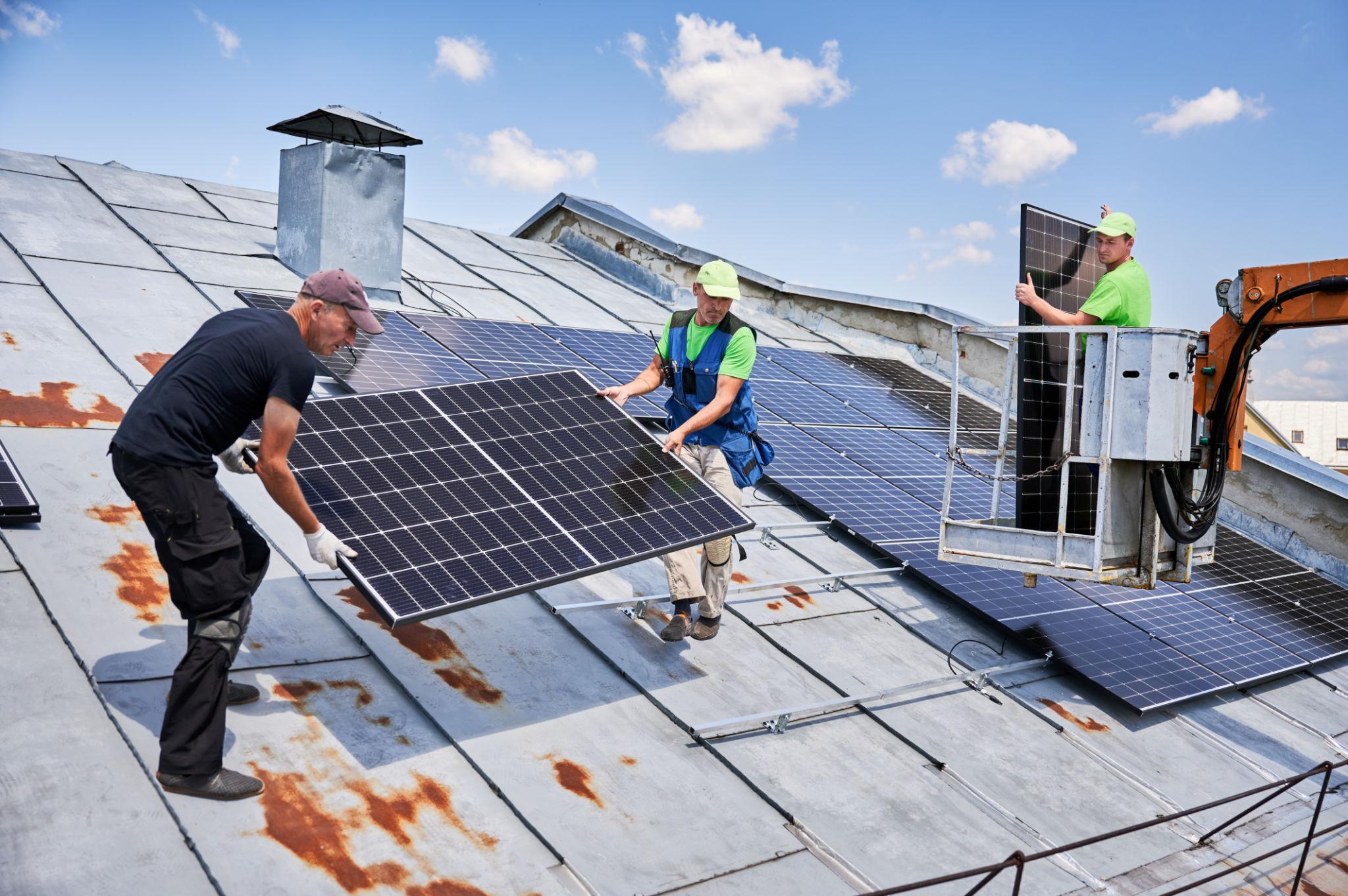
Professional installation typically follows several structured steps.
These include:
- Site inspection and technical assessment
- System design planning
- Mounting structure installation
- Solar panel placement
- Electrical wiring setup
- Inverter connection
- Testing and commissioning
The entire process usually takes a few days depending on system size.
Learn About Net Metering Benefits 🔁
Net metering allows homeowners to send excess electricity back to the grid.
Advantages include:
- Reduced electricity bills
- Credit for surplus energy generation
- Improved return on investment
- Better energy utilization efficiency
Availability depends on regional electricity policies.
Maintain Your Solar Panels for Long-Term Performance 🧽
Solar panels require minimal maintenance but benefit from regular care.
Maintenance tips include:
- Cleaning panels periodically
- Removing dust and debris
- Checking wiring connections annually
- Monitoring inverter performance
Proper maintenance ensures consistent energy generation.
Understand Installation Costs and Savings 💰
Solar installation costs vary depending on system size and equipment type.
However, long-term savings usually include:
- Reduced electricity bills
- Lower dependence on conventional power
- Protection against tariff increases
- Potential incentives or subsidies (in some regions)
Most residential solar systems recover installation costs over several years through energy savings.
FAQs About Installing Solar Panels at Home
1. How long do residential solar panels typically last?
Most solar panels have a lifespan of 25 to 30 years, with gradual efficiency reduction over time.
2. Can solar panels generate electricity during cloudy weather?
Yes. Panels still produce electricity under cloudy conditions, though output levels are lower compared to sunny days.
3. Is professional installation necessary for home solar systems?
Yes. Professional installation ensures safety, compliance with regulations, and proper system performance.
4. Do solar panels require frequent maintenance?
No. Basic cleaning and occasional inspection are usually enough to maintain performance.
5. Can solar panels power an entire house?
Yes. A properly sized system can meet most or all household electricity needs depending on consumption patterns.
6. Are batteries required for grid-connected solar systems?
No. Batteries are optional for grid-tied systems but necessary for backup power in hybrid or off-grid setups.
7. Will solar panels damage my roof structure?
When installed correctly by professionals, solar panels do not damage roofs and may even help protect roofing surfaces from direct sunlight exposure.