How Bangkok Is Moving Toward Cleaner, Greener Urban Design
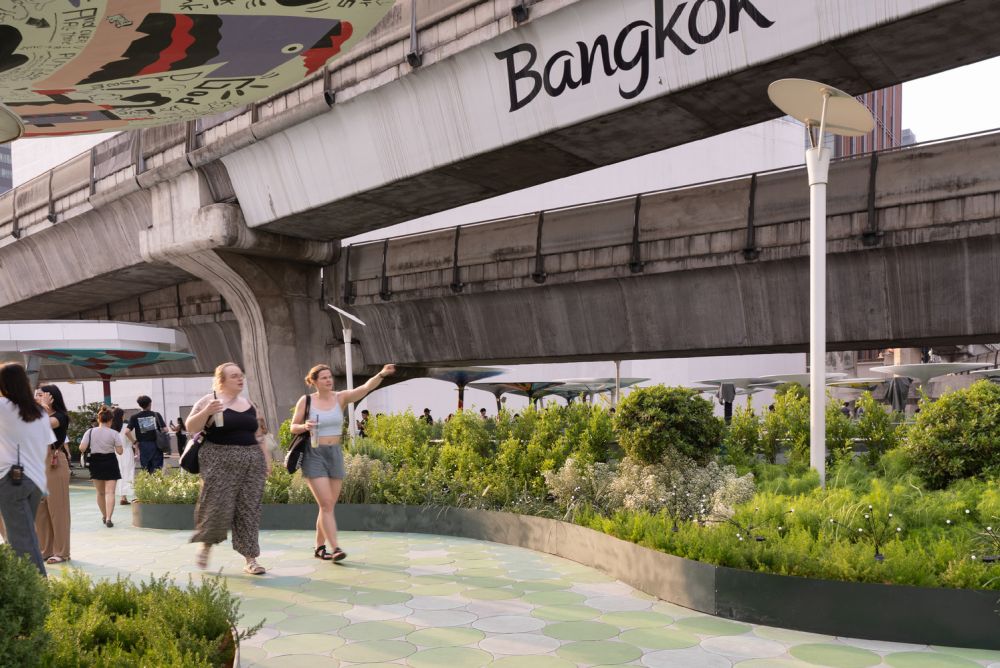
Bangkok’s growth has brought new offices, homes, transport links and retail districts, but it has also made public outdoor space far more valuable. In a dense city, good urban design is not only about the buildings people use. It is also about the routes they walk, the shade available during the day and the places where they can spend time outside without being surrounded by traffic.
The demand for lush green areas Bangkok residents can use in daily life reflects that change. Green space is increasingly expected to sit alongside development, rather than being treated as a separate destination that people visit only at weekends. When parks and planted walkways are close to homes, offices and transport, they become part of ordinary routines.
This matters in practical ways. A shaded pedestrian path makes it easier to walk between places rather than immediately looking for a car. Trees and rest areas make outdoor time more comfortable during the warmer parts of the day. Cycling routes give people another way to move around a district, while open space creates room for exercise, community activities and time away from indoor environments.
Bangkok already has major public parks, but connecting green areas can make them far more useful. A new urban park on Rama IV covers more than 50 rai and links towards Lumphini Park and Benjakitti Park, forming part of a much wider stretch of greenery in central Bangkok. Instead of having isolated pockets of parkland, the city gains routes that can support walking, cycling and outdoor activity across a larger area.
That kind of connection can influence how a district feels. Someone leaving an office does not need to plan a trip to a park if a comfortable green route is already nearby. Residents have somewhere to walk in the morning or evening. People meeting friends can choose an outdoor setting that feels open and accessible rather than defaulting to another indoor venue.
Planting also has to be functional. Trees are most valuable when they provide shade along routes people actually use. Seating matters when it is placed somewhere comfortable enough to sit for more than a few minutes. Water features and planted areas can help soften the experience of being in a heavily developed part of the city. These details may seem small individually, but together they determine if people genuinely use the space.
Cleaner urban design is not limited to air quality or environmental targets. It also involves creating areas where walking and cycling are realistic choices, where people can spend time outdoors comfortably and where new development leaves room for public life. A park with pedestrian routes, cycling access and all-day availability can support those habits in a way that decorative greenery around a building entrance cannot.
The most successful green spaces are usually the ones that do not require a special occasion. They can be used before work, at lunchtime, after dinner or during a quiet weekend morning. In a city as active as Bangkok, that everyday usefulness is what makes open space matter.
Bangkok will continue to build upwards and outwards. The stronger developments will be the ones that also think about life at ground level, with trees, walking routes and public outdoor areas that make the city feel better to move through and spend time in.