Onshore vs Offshore Wind: The Future of Wind Energy Companies in India
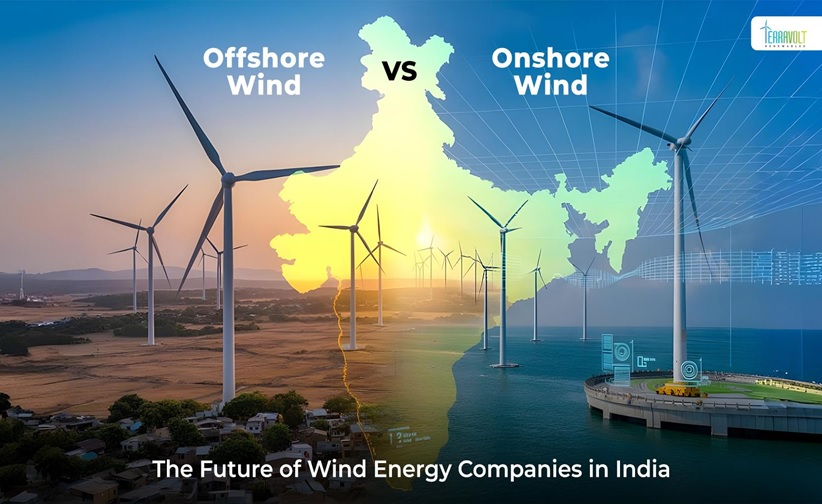
As the world moves toward sustainable energy, wind power stands out as one of the safest and fastest-growing clean energy sources. Because of rising concerns, wind energy companies in Mumbai are spreading their operations to more places. But should businesses put more money into local wind farms or offshore wind projects?
Well, countries are stepping up their climate goals, especially India, which is becoming a major hub for clean energy. The wind energy companies are looking at where the best chances are. The top wind energy companies decide where to invest based on whether they want to go offshore or onshore. This is true whether they want to go to the windy plateaus in the middle of the country or the windy coasts along the Arabian Sea and Bay of Bengal.
We look at the technical, economic, and strategic sides of both onshore and offshore wind projects in this piece. We also look at where Indian wind energy companies, especially those in Mumbai, are putting their money.
The World’s Wind Energy Scene
A big part of the world’s renewable power comes from wind energy. The Global Wind Energy Council (GWEC) says that by the end of 2023, over 906 GW of wind capacity will have been added around the world. Most of that capacity came from onshore wind. Offshore wind, on the other hand, is quickly catching up.
A lot of money has been put into offshore projects by countries like the UK, China, Germany, and Denmark. These countries believe that the open seas have a lot of untapped potential and better capacity factors. On the other hand, onshore wind is still the most popular because it is cheaper to put in.
Wind energy top companies make up more than 10% of all green energy in India, second only to solar power. As of 2023, about 45 GW of capacity had been added.
Onshore Wind: The Workhorse That Has Been Tried and True
When wind turbines are put up on land, usually in hills or open plain areas with steady wind flow, this is called “onshore wind.”
Pros of Onshore Wind Power
- Less Expensive to Install: Setting up and maintaining onshore wind projects is usually cheaper than doing it abroad. This makes them easier for players of average size to get.
- Faster Deployment: Logistics are easier and technology is simpler, which speeds up deployment.
- Mature Supply Chain: India has a well-established environment that maintains wind turbines.
- Creating Jobs in Rural Areas: These projects create jobs in areas that aren’t well developed yet, which helps growth.
- Problems with Getting Land for Onshore Wind: India’s complicated land rules can cause projects to be late.
- Effects on the Environment and People: Cutting down trees and problems with moving people can slow down progress.
- Limited Wind Resource in Some Areas: Not all areas have fast enough winds to make business possible.
Offshore Wind is the Next Big Thing
When you use offshore wind, you put turbines in bodies of water, usually the ocean, where the wind blows faster and more consistently.
Pros of Offshore Wind Power
Onshore turbines can only work at a 30 to 35% capacity factor, but offshore turbines can work at over 50% capacity factor.
- Larger Turbines: Since there is more room, bigger turbines can be put in, which increases production.
- Less noise and light pollution: offshore sites are far from places where people live.
- Less Intermittency: Offshore wind is better for grid safety because the wind patterns are more stable.
Problems with Offshore Wind Energy Top Companies
- High capital costs: needs complex engineering and deep-sea fitting gear.
- Longer Development Time: Lead times get longer because of environmental clearances and marine studies.
- Maintenance Difficulty: Marine settings that are rough make maintenance hard and expensive.
The Future of Offshore Wind in India
Gujarat’s coast will be the first Indian offshore wind farm that will be able to handle 1 GW. The government is to power 30 GW of wind farms off the coast by 2030.
There are a lot of wind energy companies in Mumbai, which is near the western shore. These companies are now looking into offshore projects to see if they can work together or invest in them. Mumbai is near the coasts of Gujarat and Maharashtra, which could make it a place where offshore wind projects are planned and put together.
The Ministry of New and Renewable energy (MNRE) of India wants to get people to share information and get tech help. So do the governments of Japan and Denmark.
Mumbai: The Wind Energy Leadership
Mumbai, which is India’s business capital, is becoming an important place for Renewable energy strategy. Before, most of the wind energy businesses in Mumbai were solar-only. Now, many of them also do offshore and onshore wind. It is convenient for wind energy companies to set up shop in the city because it is close to global banks, ports, and tech talent.
The biggest names in wind energy that are based in or work out of Mumbai are
- Suzlon Energy is one of India’s biggest companies that makes wind turbines and has a big influence in both Indian and international markets.
- If you want to help Reliance New Energy reach its green energy goals, you can invest in wind farms. This is what the company does as part of Reliance Industries.
- Adani Green Energy: Adani is mostly interested in solar energy, but they have also shown interest in big wind projects in the ocean.
People think that these top wind energy companies will have a big impact on India’s future with wind energy.
Innovations in technology Driving the Shift
In future, it becomes easier to do wind projects both on land and at sea.
- Floating Offshore Turbines: These can be put in place in deeper water than standard foundations would allow.
- Hybrid Renewable Parks use wind, sun, and storage to provide clean energy 24 hours a day, seven days a week.
- AI and IoT are being used in predictive maintenance to make turbines more efficient and lower the costs of running and maintaining them.
- Bigger and better blades: Turbines can now produce more than 15 MW, which means they can be used offshore.
As technology improves, it becomes easier for wind energy companies to branch out into both offshore and land markets.
Where do Wind Energy Companies put their Money?
- Europe is putting a lot of money into offshore projects because there isn’t much room ashore, and the wind speeds along the coast are high.
- China is adding the most capacity both on land and at sea.
- USA: A fair mix, with more and more plans to go offshore, especially along the East Coast.
- From India’s Point of View, Short-Term Bets Onshore continue to get most of the capital because it is easier and there is already a lot of knowledge about it.
- Offshore is getting more attention because it has a lot of promise, and investors from all over the world are interested in it.
India wants to have 500 GW of non-fossil fuel capacity by 2030. To reach this goal, Indian wind energy companies are planning their businesses to cover both of these markets.
Support from the government: A deciding factor
- Support for policies is a big part of where businesses decide to put their money.
- Offshore Wind Policy (2015): India has its policy for offshore wind power that makes it easier to find sites, do studies, and plan investments.
- Wind-Solar Hybrid Policy: This policy encourages companies to combine resources.
- Accelerated Depreciation and GBI: Wind projects are still appealing because of tax breaks.
- Also, states like Gujarat and Tamil Nadu were the first to build wind corridors, which brought big companies to their shores.
- Offshore and coastal winds are not being compared so that one can be picked over the other. Instead, the goal is to use the best parts of both.
- Onshore wind gives quick returns and works best in states with well-known wind routes.
- Offshore wind, even though it costs a lot of money, has the potential to produce a lot of electricity with few breaks.
Conclusion
Diversification is the key to the future for wind energy companies in Mumbai and all over India. Putting money into both land and offshore projects, along with solar and storage, is the best way to make money and last for a long time.
Indian wind energy companies will be the best in the world as the world races toward a net-zero future and climate promises can not be broken. When policy, capital, and technology all work together, the wind blows in the right way, whether it’s over the waves or across the fields.